Introduction
In dozens of UK factories, operators still walk around with clipboards, manually recording gauge readings. Errors are inevitable, response times are slow, and historical data gets lost in paper folders. SCADA systems fundamentally change this picture – from manual observation to automated real-time control.
The problem? Licences for enterprise SCADA platforms such as Siemens WinCC cost thousands of pounds, plus annual fees. For a small or medium-sized factory in the UK, this is a prohibitive investment. The good news is that open-source alternatives now offer comparable functionality – at zero licensing cost.
In this article, you will learn what SCADA is, why native COM ports are critical for reliable communication, and how the combination of IBOX-3026 + RapidSCADA delivers a professional solution.
What is SCADA?
SCADA stands for Supervisory Control And Data Acquisition – a system for supervisory control and data collection. Let us break down the three pillars:
SCADA Architecture with IBOX-3026
IBOX-3026 collects data from sensors and PLC controllers via COM ports and visualises it in real time
Supervisory
Real-time monitoring dashboards. The operator sees temperatures, pressures, and levels from a single workstation – without walking around the factory floor.
Control
Sending commands to PLC controllers – opening/closing valves, starting/stopping motors, changing setpoints.
Data Acquisition
Collecting data from sensors, logging to a database, and analysing trends. Historical data reveals problems before they become failures.
Key point: SCADA is not just software – it is the nervous system of every modern factory. Without it, operators react to failures; with it – they prevent them.
COM Ports – why are they critical?
Most industrial devices – PLC controllers, variable frequency drives, temperature sensors – communicate via RS-232 or RS-485 (a serial protocol, also known as a COM port). This is not “outdated technology” – RS-485 supports up to 32 devices on a single bus over distances of up to 1,200 metres.
The problem arises when you try to connect these devices to a modern computer that does not have a single COM port.
RS-485 Modbus RTU Bus — up to 32 devices per port
Native COM Ports
- Stable, kernel-level communication
- No additional drivers – works from day one
- Instant response (latency under 1 ms)
- Withstand vibrations – soldered directly to the board
USB-to-Serial Converters
- Driver issues after Windows Update
- Disconnections during vibrations – the connector works loose
- Limited number of addresses on the USB bus
- Additional latency from the USB protocol
In practice: 6 native COM ports = up to 192 Modbus devices without a single adapter. Each RS-485 port supports 32 slave addresses under the Modbus RTU standard.
Open-Source SCADA vs Siemens WinCC
Three real options for SCADA software – from enterprise to completely free:
Siemens WinCC
Licence
Paid, per-seat
Annual maintenance
Annual fee
Characteristics
Closed source, German support, comprehensive but expensive
RapidSCADA
Licence
Free (Apache 2.0)
Protocols
Modbus RTU/TCP, OPC UA
Characteristics
Web dashboards, active community, Russian/English documentation
ScadaBR
Licence
Free (GPL)
Platform
Java-based
Characteristics
Focus on building automation, Portuguese/English community
Fact: Zero licence fees mean that your 3-year TCO drops by 80%. The savings go towards sensors, training, and genuine modernisation of your production.
IBOX-3026: Built for SCADA
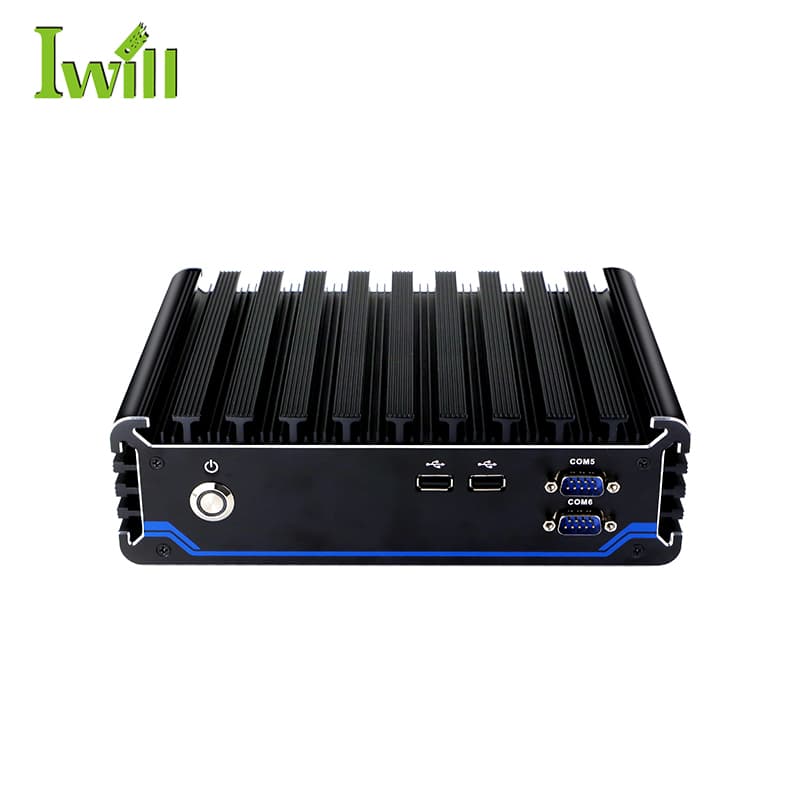
The hardware is the other half of the equation. IBOX-3026 is designed specifically for industrial automation – every port and every component has a specific role:
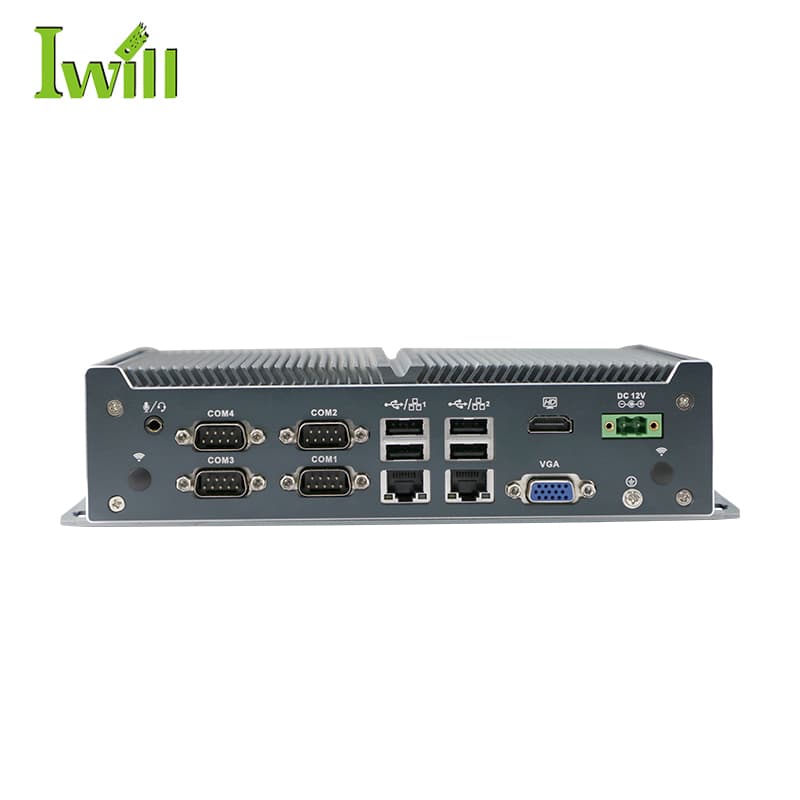
6× COM Ports
RS-232/RS-485 configurable. Direct connection to PLC controllers, variable frequency drives, and temperature sensors – without a single USB adapter.
Dual Gigabit LAN
Separation of the OT (Operational Technology) network from the IT network. One connects the SCADA server, the other – the corporate intranet.
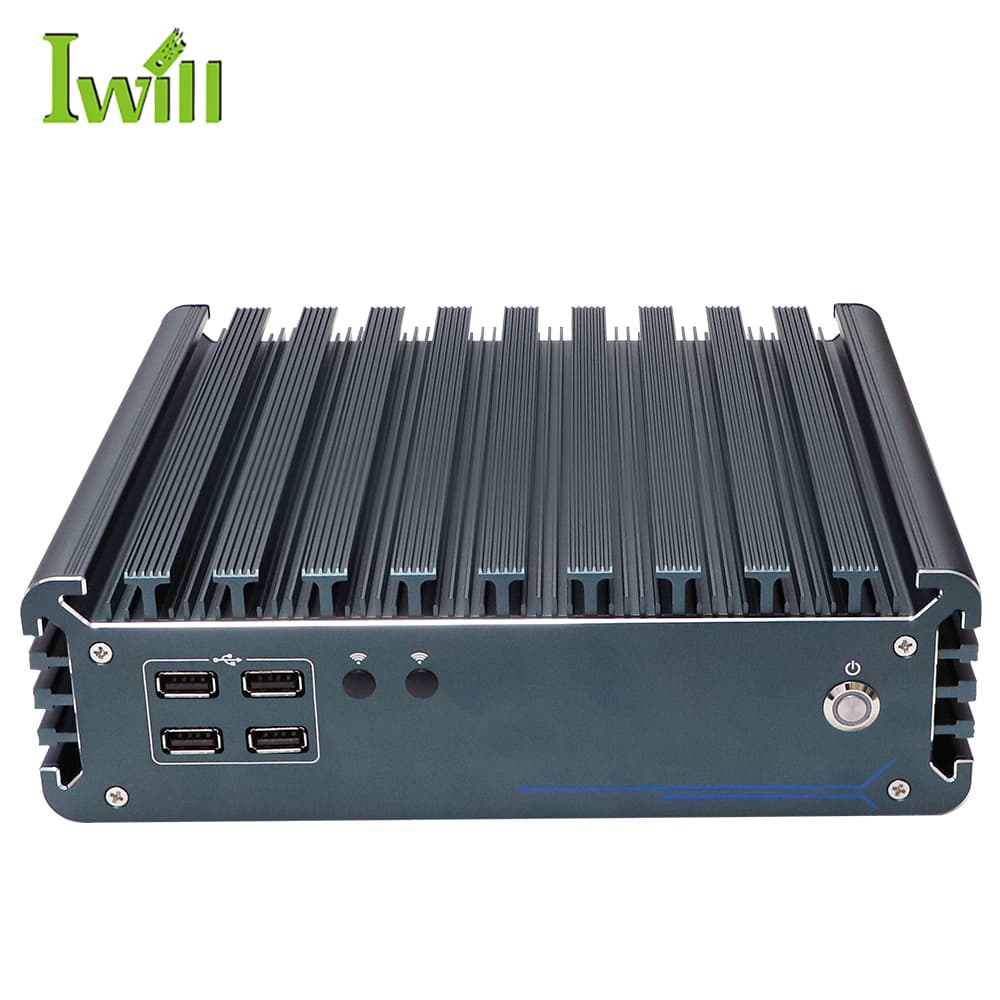
Fanless: -20°C to +60°C
No moving parts for the factory floor. The aluminium chassis dissipates heat passively – without drawing in dust and metal shavings.
HDMI + VGA
Dual monitor support for HMI panel + operator station. VGA for compatibility with legacy industrial displays.
Cost Comparison
| Component | Typical SCADA Station (Siemens) | IBOX-3026 + RapidSCADA |
|---|---|---|
| Hardware | Proprietary | Industrial fanless PC |
| SCADA licence | Paid | None |
| Annual maintenance | Annual fee | None |
| COM ports | 2 + USB adapters | 6 native |
| 3-year TCO | Higher | Significantly lower |
IBOX-3026 – Key Specifications
6× COM
RS-232/485 ports
i7-1165G7
11th Gen Intel
-20/+60°C
operating temperature
ready SCADA station
Conclusion
Open-source SCADA is democratising factory automation. You no longer need to spend tens of thousands of pounds to monitor and control your production in real time. With the right hardware – native COM ports, dual LAN, and a fanless design – even a small factory can deploy a professional SCADA system.
IBOX-3026 is designed precisely for this task: to be the reliable bridge between legacy analogue sensors and modern visualisation software.
Recommended SCADA Configurations
Industrial Box PC solutions with native COM ports for SCADA and factory automation.