What is IEC 61850 and why is it the standard in the power sector?
IEC 61850 is the international standard for communication and automation in electrical substations. It replaced dozens of incompatible serial protocols with a single Ethernet-based architecture in which protection relays, intelligent electronic devices (IEDs), RTUs and SCADA systems speak the same language.
At the heart of every such system sits an IEC 61850 computer system – a station computer or gateway that collects data from field devices, runs the SCADA/HMI software and links to the control centre over IEC 60870-5-104.
Choosing the right hardware here is not a detail. A substation has strong electromagnetic interference, temperature extremes and a requirement for continuous operation over many years. That is why projects use industrial PCs rather than office equipment.
Hardware requirements for IEC 61850 systems
Fanless construction
No moving parts – nothing to wear out after years in a dusty environment. Passive cooling through an aluminium chassis is essential for unmanned sites.
Wide temperature range
Substations are rarely air-conditioned. An operating range in the order of −20 °C to +60 °C covers unheated rooms in winter and closed cabinets in summer. Confirm the rating for the exact configuration.
Redundant network connectivity
At least two independent Gigabit LAN ports to build redundant industrial networks – the basis for PRP/HSR topologies and for separating the station and process buses.
Serial ports for legacy devices
Real sites always include older devices on IEC 60870-5-101/103 or Modbus RTU. RS-232/485 ports integrate them without extra converters.
Wide-range DC power
Direct supply from the station battery, with surge and reverse-polarity protection, avoids vulnerable external adapters. Wide-range DC input (for example 9–36 V) is available on selected models.
Long component lifecycle
Energy assets are designed for decades. Long-lifecycle industrial platforms make it far easier to keep identical spares throughout a project’s life.
Where the station computer sits in the network
In a typical IEC 61850 architecture the computer performs three roles at once:
- SCADA/HMI station – local visualisation of the single-line diagram, alarms and events for operators.
- Protocol gateway – translation between IEC 61850 MMS/GOOSE on the station bus and IEC 60870-5-104 to the control centre.
- Event and disturbance-record server – archiving protection-relay data for post-fault analysis.
The same requirements apply outside the power sector – in industrial automation and industrial IoT gateways, where one piece of hardware handles control, data collection and the link to the cloud.
Security: a station computer bridges the process network and the wider corporate or control-centre network. Segment it behind a firewall and restrict remote access – see our guide to NIS2 and network hardware.
Suitable IWILL models for IEC 61850 projects
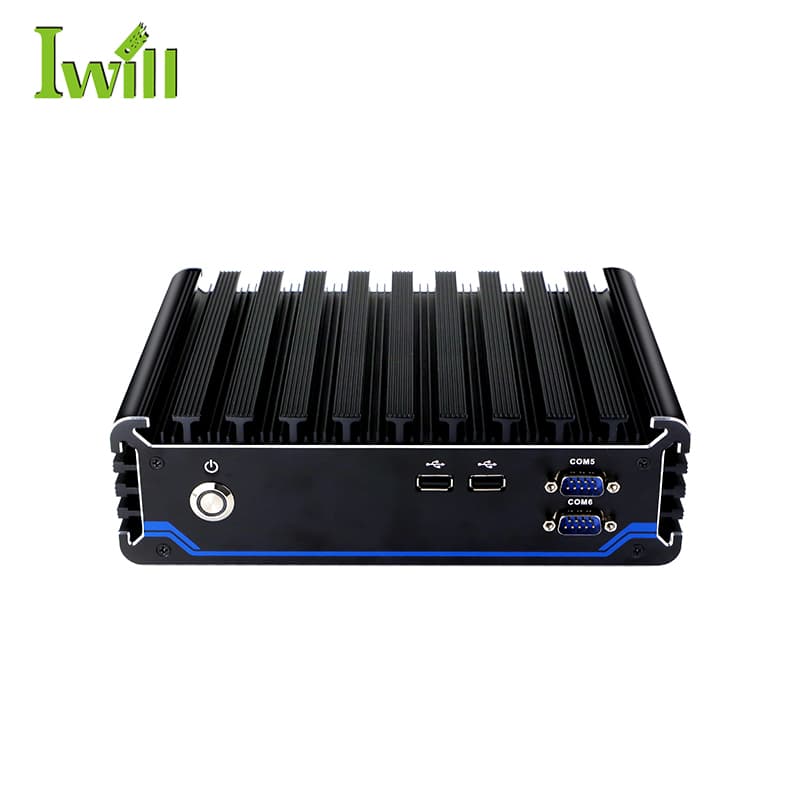
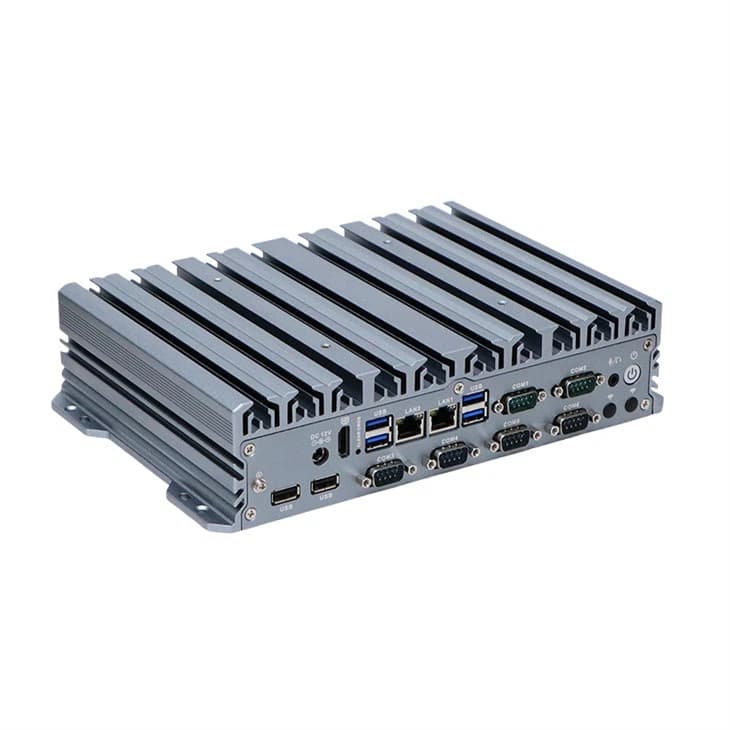
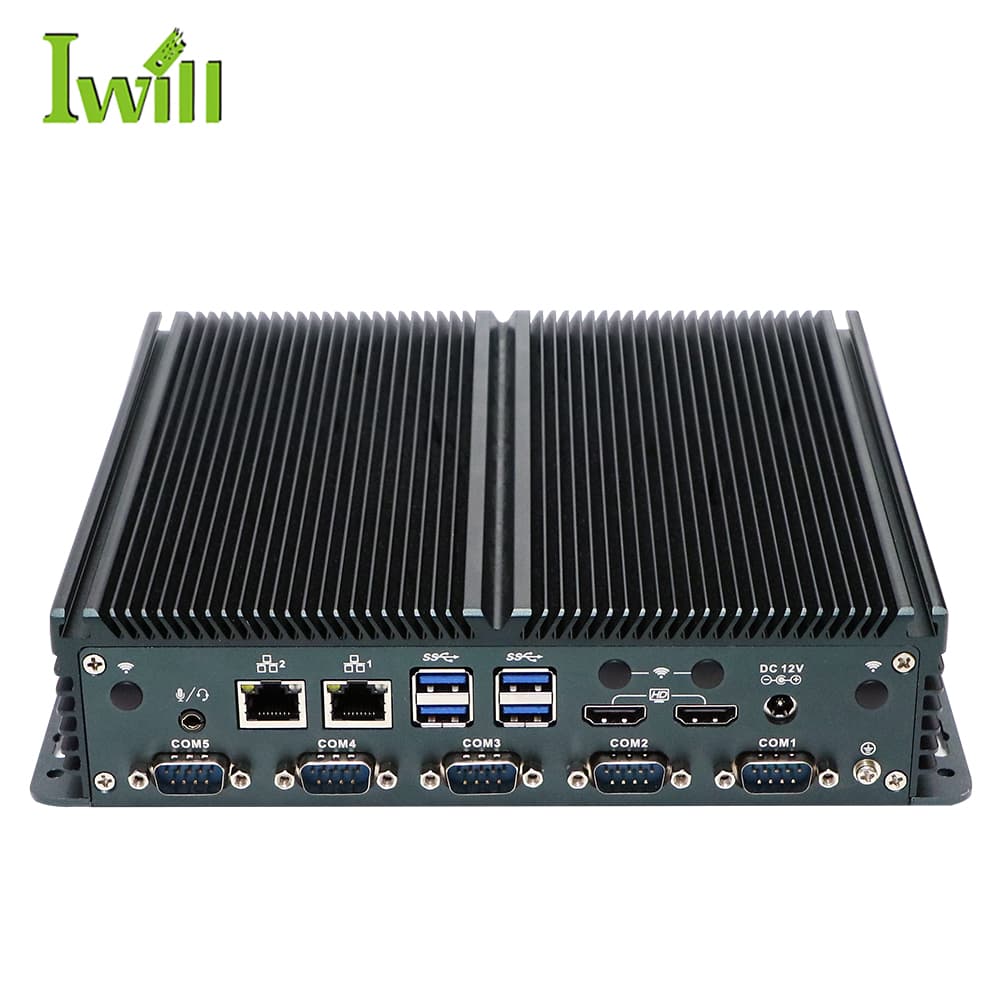
The IBOX series combines fanless construction, up to six COM ports (RS-232/485), multiple Gigabit LAN ports and wide-range DC options – the profile that station computers and protocol gateways in the energy sector require. Read more in The IBOX Series: when a standard computer is not an option.
Fanless box PCs for station and gateway roles
Multiple COM and LAN ports in passively cooled industrial chassis.